Planning Bordeaux and not sure where to start? This bordeaux travel guide gives you the short answer: see the historic centre on foot, climb a tower, taste wine, and add a vineyard day trip.
| Item | Value |
|---|---|
| Bordeaux CityPass | From €37 |
| Flèche Saint-Michel bell tower | 114 metres tall |
| Bordeaux wine output | Roughly 700 million bottles a year across 65 appellations |
| Miroir d’eau season | April to October |
| TGV journey from Paris | 2 hours |
These figures come from the Bordeaux tourist office guide, last updated on July 24, 2026, and the LaFrance guide. Prices, seasons and journey times can change, so check the source before you rely on them.
Why Bordeaux suits a first visit
Bordeaux earned its nickname Port de la Lune from the crescent-shaped curve of the Garonne through the city. According to the Bordeaux tourist office guide, the city is flat, compact and UNESCO-listed across the entire historic centre. That makes it easy to explore without a plan.
The listing came in 2007. The Traveller article says the city holds so many fine 18th- and 19th-century buildings that half of Bordeaux was World Heritage-listed that year. A French-language FranceGuide page counts more than 300 monuments inside the protected area.
The polish you see today is fairly recent. The same Traveller article credits mayor Alain Juppé with starting the renaissance in 1995, by scrubbing grime from limestone facades, installing riverfront tram lines and opening up access to the river. The LaFrance guide adds that a TGV connection now puts Paris just two hours away.
If the stonework is what draws you, a separate guide to bordeaux architecture looks at the facades in more detail. For a longer list of ideas beyond the highlights here, see this roundup of things to do in bordeaux.
The tourist office itself says that a weekend is never quite enough, so it helps to pick a few anchors and leave room to wander. This guide follows the order most visitors need:
- Landmarks and towers worth the climb
- Museums and immersive art
- Wine country and day trips
- Neighbourhoods, food and getting around
- Timing, budget and photography
Landmarks to see first
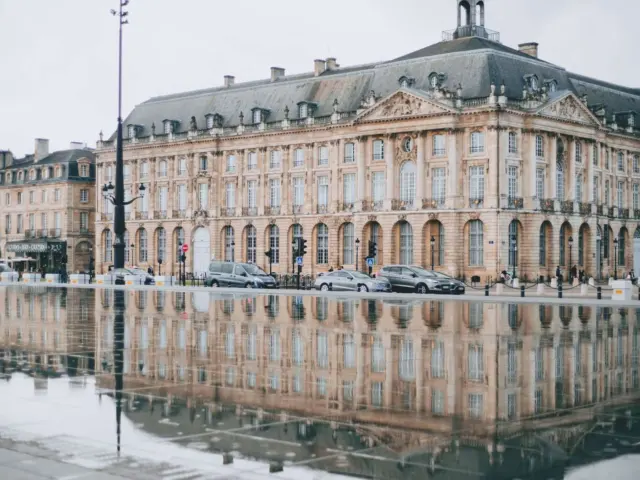
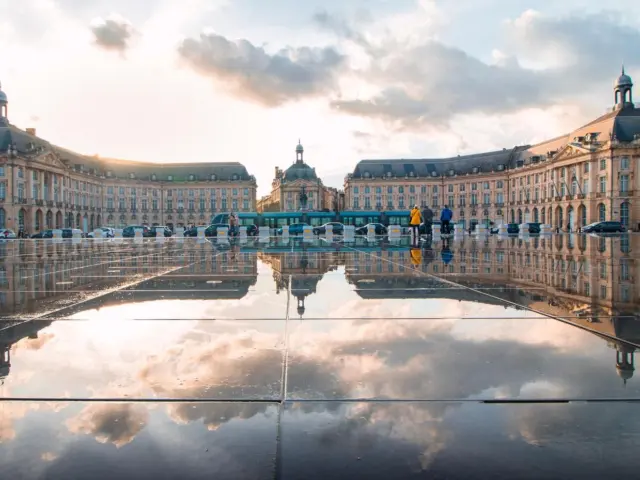
Start at Place de la Bourse. The Bordeaux tourist office guide describes this 18th-century square, designed by Ange-Jacques Gabriel, as opening onto the Garonne with a symmetry that made it one of France’s most photographed squares. A separate page on place de la bourse bordeaux looks at the square on its own.
Directly across from it lies the Miroir d’eau, a shallow reflecting pool that alternates between a mirror image of the square and a fine mist, running from April to October. The same tourist office guide says it is free and always open.
A FranceGuide page describes a repeating cycle: the pool fills with 2 cm of water for 15 minutes, empties for 5 minutes, then gives way to 5 minutes of mist. The Traveller article says it was built in 2006 and calls it the world’s largest reflecting pool, with the unfenced granite slabs covered in no more than 2cm of water.
The Grand Théâtre is the city’s opera house, built in wood in 1780 by architect Victor Louis. It still functions as the home of the Opéra National de Bordeaux. The tourist office guide notes that its monumental staircase inspired Charles Garnier’s Paris Opera, and it lists a 50-minute guided tour from €10, available in English on selected days.
Towers and viewpoints
Bordeaux is a good city to see from above, and several medieval and Gothic structures let you climb. The table sets out the details given in the Bordeaux tourist office guide.
| Viewpoint | Key detail |
|---|---|
| Porte Cailhau | 23-metre panoramic view, ticket €7 |
| Tour Pey-Berland | 231 steps, timed ticket |
| Flèche Saint-Michel | 114 metres tall, terrace at 47 metres, 230 steps, ticket €7 |
Porte Cailhau was built between 1493 and 1496 to celebrate Charles VIII’s victory at the Battle of Fornovo. The tourist office guide says this medieval gate was Bordeaux’s main entrance from the river for nearly two centuries.
The Cathédrale Saint-André is an 11th-century cathedral where Eleanor of Aquitaine married the future King Louis VII of France in 1137, and entry is free according to the tourist office guide. Right next to it stands the Tour Pey-Berland, the cathedral’s freestanding bell tower, which you reach with a timed ticket.
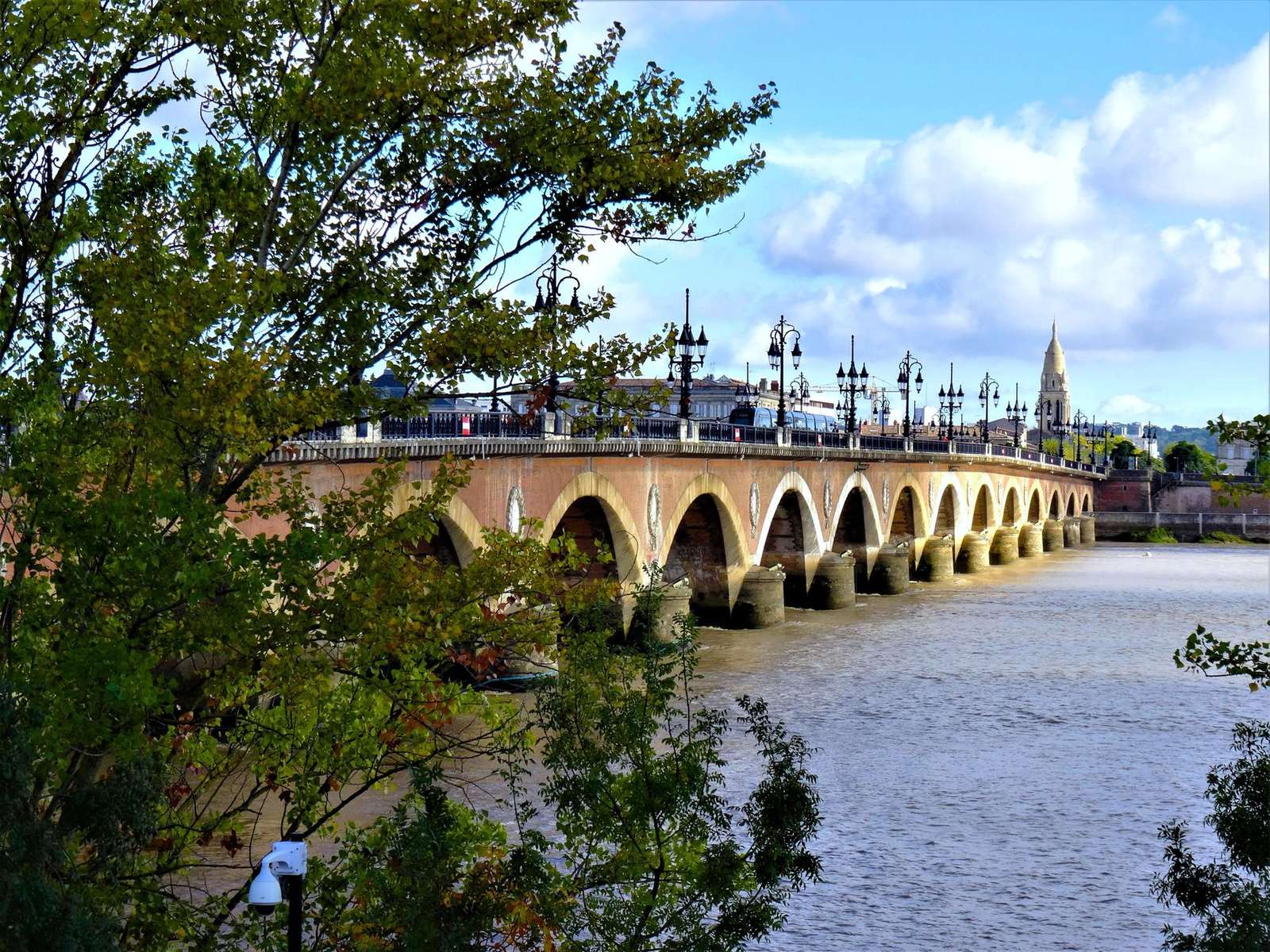
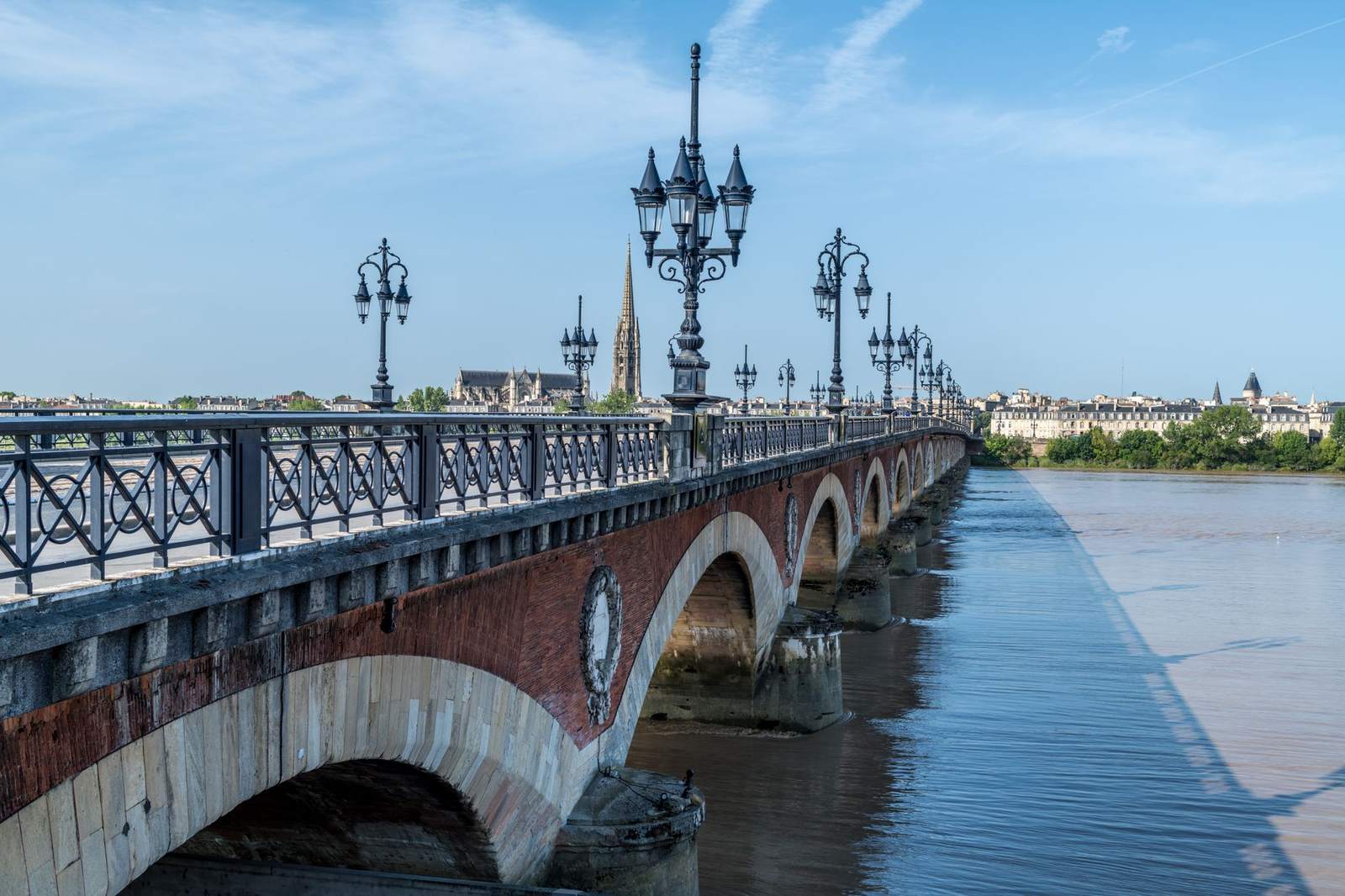
The same guide calls the Flèche Saint-Michel the best climb in Bordeaux. It is the freestanding bell tower of the Basilica of Saint-Michel and the fourth-tallest bell tower in France. From the terrace you see the historic centre, the Port de la Lune, the Pont de Pierre and the Bassin à flot beyond.
Museums, art and culture
La Cité du Vin sits on the Bacalan waterfront in a building shaped like a decanter. The Bordeaux tourist office guide calls it not a wine museum in the usual sense, but an interactive cultural centre dedicated to wine as a global phenomenon. A FranceGuide page says it was inaugurated in 2016.
Guides disagree on how long to allow. The tourist office says the permanent exhibition takes about two hours, with a tasting on the top-floor belvedere, while the LaFrance guide says to allow 2-3 hours. Voyage Tips suggests at least 3 hours, so a relaxed half day is a sensible plan.
Ticket prices also vary by source, and FranceGuide lists a ticket from €23. Check the venue’s own page for the current price before you go.
Les Bassins des Lumières is an immersive digital art centre inside a former German submarine base from World War II. The FranceGuide page counts 4 basins and 90 video projectors, and says the featured artists rotate, with Klimt, Monet, Renoir and Chagall among past themes. The tourist office guide calls it one of the most photographed experiences in the city.
FranceGuide lists a ticket for this centre from €16. As with the Cité du Vin, treat that as a guide rather than a promise.
Beyond those two, the tourist office says Bordeaux has a strong museum scene for a city of its size. Its guide lists these classical museums among the essentials:
- Musée d’Aquitaine: regional history from prehistory to the present.
- Musée des Beaux-Arts: European painting from the 16th to the 20th century.
- CAPC Musée d’Art Contemporain: contemporary art in a spectacular 19th-century warehouse.
- Musée Mer Marine: the story of maritime Bordeaux.
A separate guide to bordeaux museums goes through them in more depth.
Wine country and day trips
You cannot really visit and skip the wine. The tourist office guide says the region produces roughly 700 million bottles a year across 65 appellations, and that the châteaux are only a short drive from the city.
The best choice depends on whether you have a car. These steps keep the decision simple:
- Decide whether you will have a car, because that changes which regions are practical.
- Without a car, pick a small-group excursion or take the train to Saint-Émilion.
- With a car, book château visits directly and in advance for longer visits and more contact with the winemakers.
The tourist office says small-group excursions leave Bordeaux for Saint-Émilion, the Médoc, Graves or Sauternes, with transport, château visits and tastings included. Half-day tours start at €55 and full-day tours are around €99, according to the same guide.
The LaFrance guide sketches the main areas:
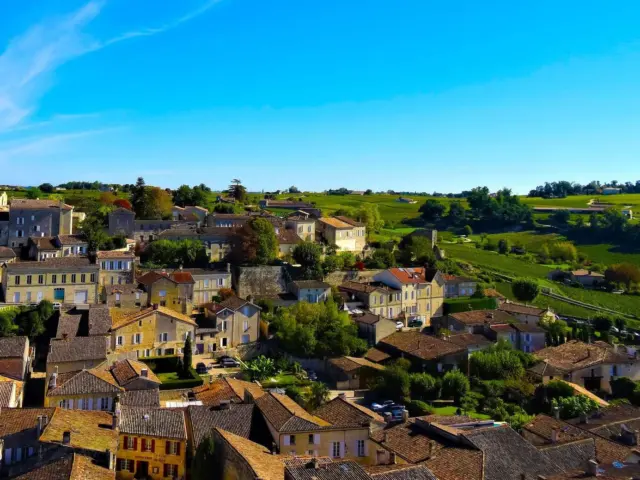
- Saint-Émilion: a medieval hilltop village surrounded by vineyards, 35 minutes east of Bordeaux by train, with a remarkable monolithic underground church.
- Médoc: the Left Bank villages of Pauillac, Margaux, Saint-Julien and Saint-Estèphe, with the D2 Route des Châteaux as a classic wine drive.
- Graves and Pessac-Léognan: south of the city and easily reached by tram to Pessac or by car.
- Sauternes: sweet white wine country, 40 km south, where Château d’Yquem is described as the most famous estate.
If the village is your priority, a dedicated saint-emilion day trip from bordeaux guide covers it in more depth. LaFrance also says that Saint-Émilion, the Médoc and Graves are all within an hour’s drive, and that many Saint-Émilion tastings are free or €5-10.
Car rental is described by LaFrance as essential for the Médoc and Sauternes, and not needed in the city itself. If you would like help choosing, the Traveller article points to the dedicated booking counters within La Cité du Vin or at the Bordeaux visitors’ centre.
Neighbourhoods, food and getting around
Where to wander
The historic core rewards walking with no fixed plan. The tourist office guide and the LaFrance guide between them describe these areas:
- Saint-Pierre: the medieval heart, with narrow pedestrian streets, small squares and cafés on every corner.
- Chartrons: the former wine merchants’ quarter, now an antiques and design district with a Sunday morning market along the quays.
- Saint-Michel: the most authentic and multicultural central district, home to the Marché des Capucins.
- Bacalan: the northern waterfront, home to the Cité du Vin and Les Bassins des Lumières.
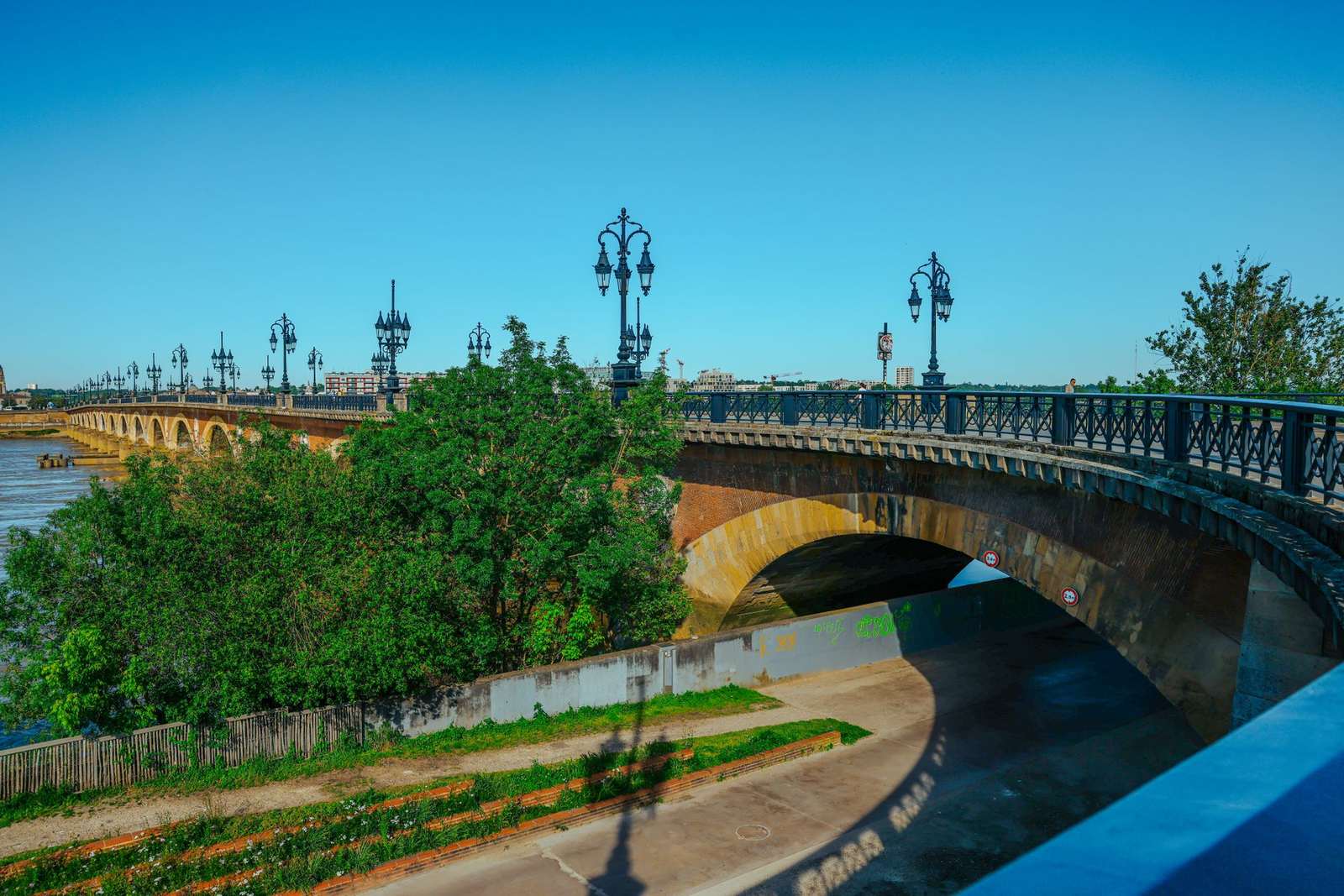
- La Bastide and Darwin: the right bank across the Pont de Pierre, with the best view back at the historic centre.
The Traveller article says Darwin turned abandoned military warehouses into a hangout and co-working space, with the first occupants arriving at the end of 2012. It adds that the site is now home to 180 businesses. LaFrance also points to Rue Sainte-Catherine, which it calls Europe’s longest pedestrian shopping street.
What to eat
Bordeaux cooking leans on duck, seafood and wine, according to the LaFrance guide. A short tasting list looks like this:
- Canelé: the signature pastry, a small caramelised cake with a custardy centre.
- Entrecôte bordelaise: steak in a red wine and shallot sauce.
- Arcachon oysters: the oyster beds are 50 km away, and in Bordeaux they are served with spicy crépinettes sausage.
- Lamproie à la bordelaise: lamprey cooked in red wine, adventurous but traditional.
- Duck confit and magret: the south-west’s beloved duck dishes.
The Traveller article repeats a story that winemakers used egg whites to filter their wines and gave the yolks to nuns, who turned them into canelés. For more dishes and where they come from, read about bordeaux food specialties. LaFrance suggests the Marché des Capucins, a food market open mornings and especially busy on weekends.
Getting there and around
The LaFrance guide says the TGV from Paris takes 2 hours to Bordeaux-Saint-Jean station. A shuttle bus links the airport to the centre in 30 minutes. In the city, the tram has three lines covering the centre and inner suburbs, and bike-share stations are spread through town.
The tourist office lists several guided ways to see the centre, shown below as given in its guide:
- Walking tour: a two-hour guided walk of the historic centre, from €13.
- Hop-on hop-off bus: a 24-hour open-top bus with 10 stops and an audio guide in eight languages, from €22.
- Electric touristic train: a 40-minute loop from the Quinconces esplanade, from €10.
- River cruise: a commented cruise of 1h30 along the quays and under the Pont de Pierre.
The CityPass bundles several of these. The tourist office says it covers unlimited public transport, La Cité du Vin, Les Bassins des Lumières, 15 museums and monuments, and one guided tour, all from €37, and it suggests the pass if you plan to visit more than two or three sites.
Timing, budget and photography
The LaFrance guide recommends May to October for the best weather and vineyard experiences, with September as harvest season. It says winter is quieter, but that indoor attractions such as the Cité du Vin and the Bassins de Lumières are excellent year-round. A separate guide covers the best time to visit bordeaux month by month.
Many of the best things cost nothing. LaFrance lists the Miroir d’eau, the Pont de Pierre and the riverside walks as free, and the tourist office says entry to the Cathédrale Saint-André is free. LaFrance also suggests eating at the Marché des Capucins for affordable market-fresh meals.
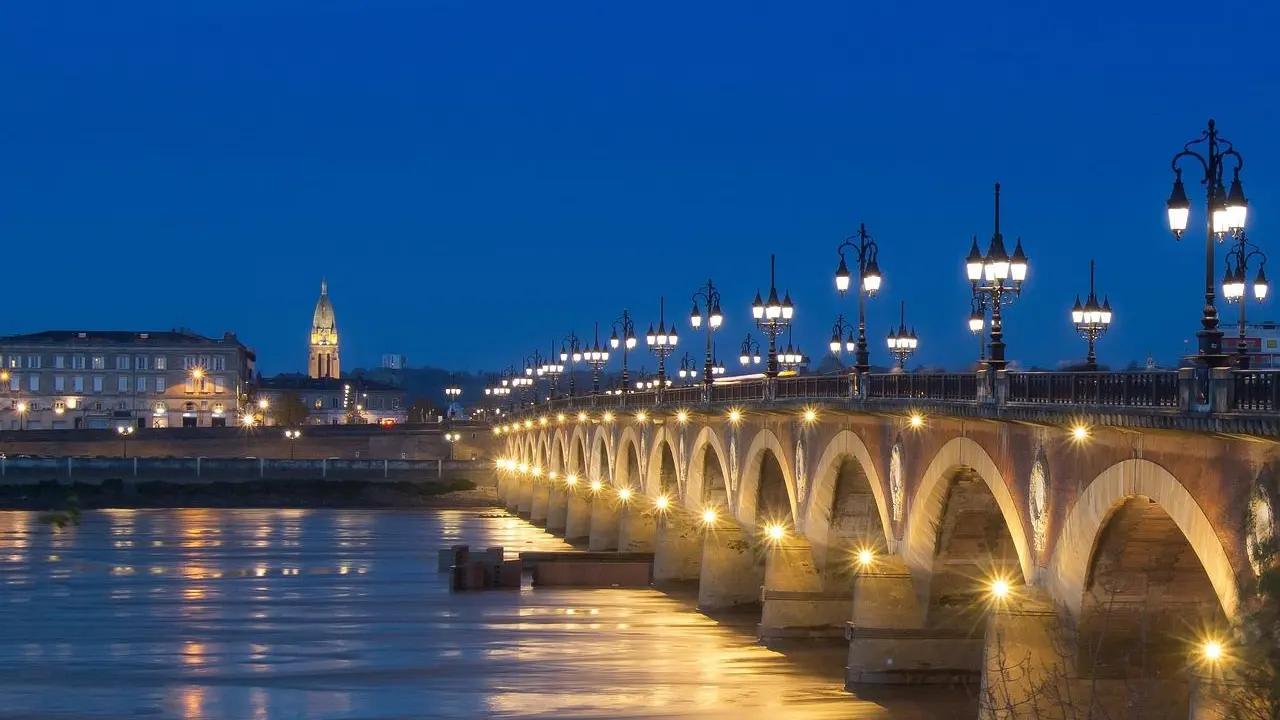
For photographers, LaFrance says Place de la Bourse and its water mirror are best at sunset, and that the Pont de Pierre, which it calls Napoleon’s bridge, is beautifully lit at night. FranceGuide adds that the Miroir d’eau delights photography lovers in particular. A guide to photography spots in bordeaux gathers viewpoints by theme.
The mirror’s fill, empty and mist cycle changes the picture every few minutes, so patience pays. If you want the creative background, a guide to fine art photography explains the genre, and a separate page on photography techniques covers the craft side.
This is an independent editorial guide. It is not affiliated with any venue, tour operator or organisation named here, and it does not sell tickets or take bookings.
Frequently asked questions
Is Bordeaux easy to explore on foot?
Show answer
Yes. The tourist office guide describes the city as flat and compact, and LaFrance adds that it has a tram network with three lines.
How long does it take to reach Bordeaux from Paris?
Show answer
The LaFrance guide gives the TGV journey from Paris to Bordeaux-Saint-Jean as 2 hours. Check the operator’s timetable for your own date.
Do I need a car to visit the vineyards?
Show answer
Not for every region. LaFrance says Saint-Émilion is 35 minutes from Bordeaux by train, though a car is essential for the Médoc and Sauternes. Without one, the tourist office guide lists half-day tours from €55.
Is the Miroir d’eau free to visit?
Show answer
Yes. The tourist office guide says it is free and always open, and that it runs from April to October.
Is the CityPass worth buying?
Show answer
It depends on how many sites you plan to see. The tourist office guide prices it from €37 and suggests it for more than two or three sites, so add up your own list before you decide.