Not sure where to point your camera? The best photography spots in Bordeaux are the Miroir d’eau, Place de la Bourse, Porte Cailhau, Cathédrale Saint-André and Jardin Public. Start at the water mirror.
This page is one stop in the bordeaux travel guide, which covers the wider city around these frames.
| Item | Value |
|---|---|
| Miroir d’eau surface area | 3,450 square metres |
| Miroir d’eau water depth | 2 cm |
| Mist nozzles at the Miroir d’eau | 900 |
| Place de la Bourse built | 1729 to 1755 |
| Porte Cailhau tower height | 35 metres |
| Jardin Public area | 11 hectares |
The figures come from Flytographer’s Bordeaux photo-spot guide, last updated March 21, 2023, and from Lonely Planet France’s page on the square and the water mirror. Sizes, depths and details can change, so check the source before you rely on them.
Miroir d’eau: the reflection that defines Bordeaux photos
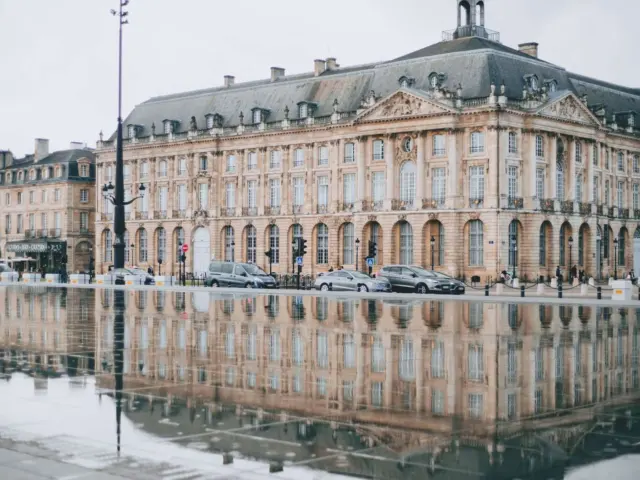
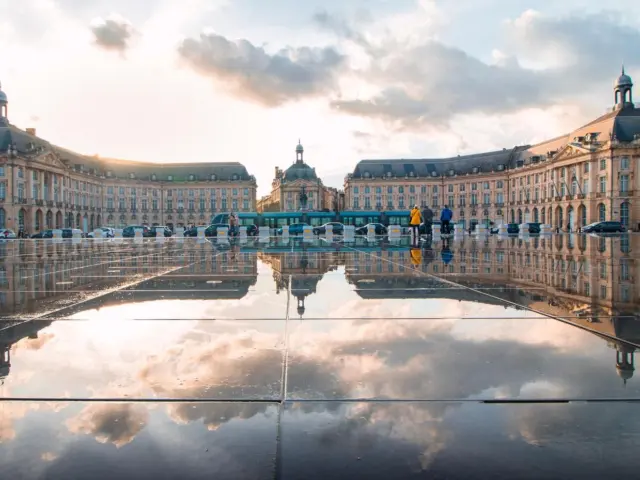
The Miroir d’eau sits in front of Place de la Bourse, and Flytographer’s guide calls it one of the most popular attractions in the heart of the city. It covers 3,450 square metres, was first installed in 2006 and was designed by landscape architect Michel Corajoud.
Lonely Planet describes a large slab of blue granite covered with water only 2 cm deep. That shallow film is what makes the picture work: the sky and the buildings sit on the ground at your feet, and you can walk right across it.
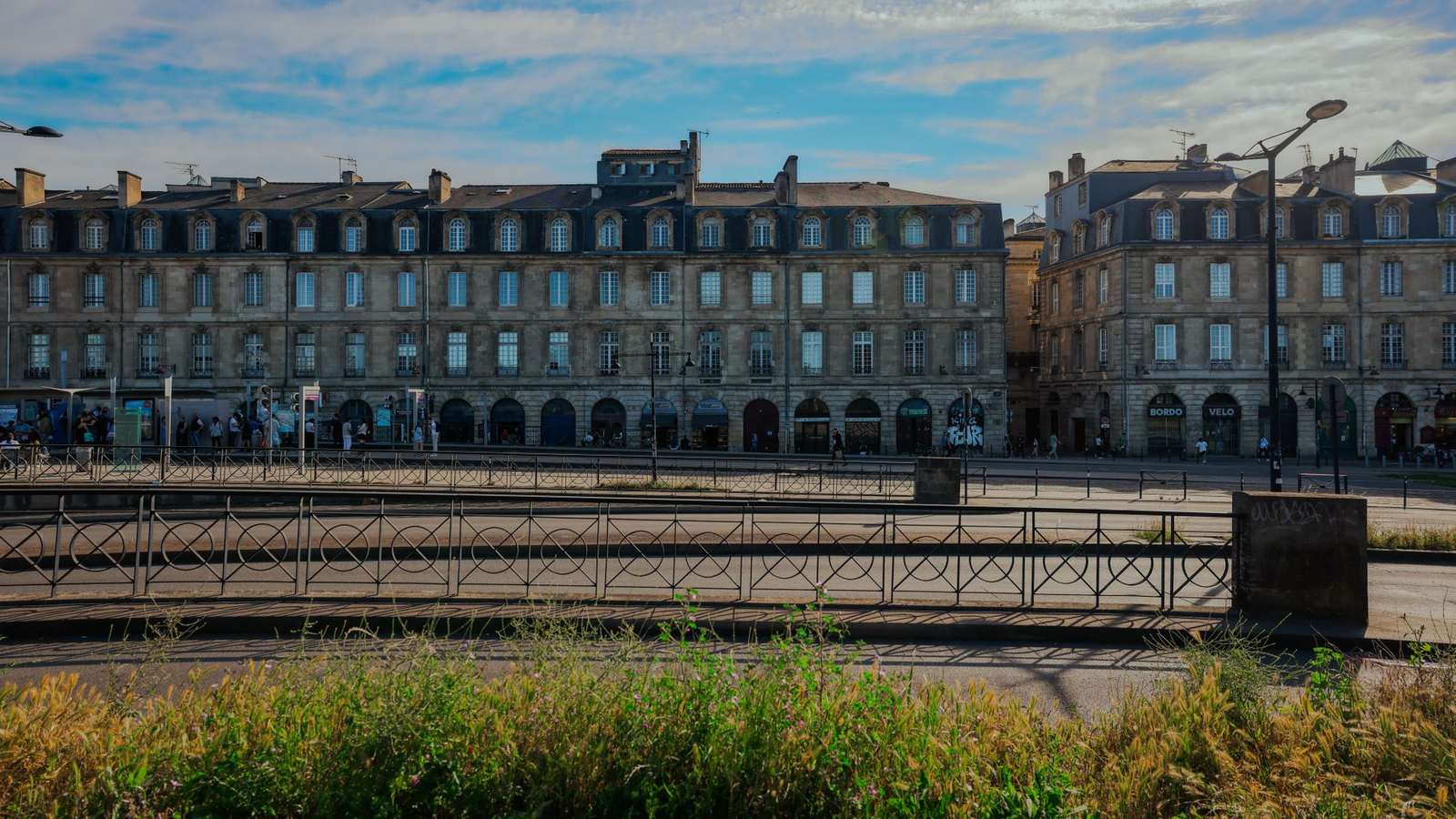
Stand with your back to the river and the reflected facades of the 18th-century buildings fill the frame, as Lonely Planet notes. A low camera position keeps the mirror effect strong, because the closer you get to the water, the more of the reflection you capture.
The pool is not static. Several times an hour, 900 mist nozzles switch on, and the fog turns walkers into ghostly silhouettes, according to Lonely Planet. Treat the clear water and the mist cycle as two different pictures and shoot both.
Four kinds of frame are worth planning for:
- Clear-water reflections of the facades, shot low with your back to the river.
- Mist silhouettes of people walking through the fog.
- Summer crowds, when Lonely Planet says the pool turns into a kind of mini beach where people come to cool off.
- Night shots, since Flytographer says the pool is lit by a light show after dark.
Place de la Bourse: facades and the Three Graces
The square behind the pool is a subject in its own right, and the guide to place de la bourse bordeaux goes deeper into its history and layout. For photography, the key point is that the architecture was built to be seen as a single composed front.
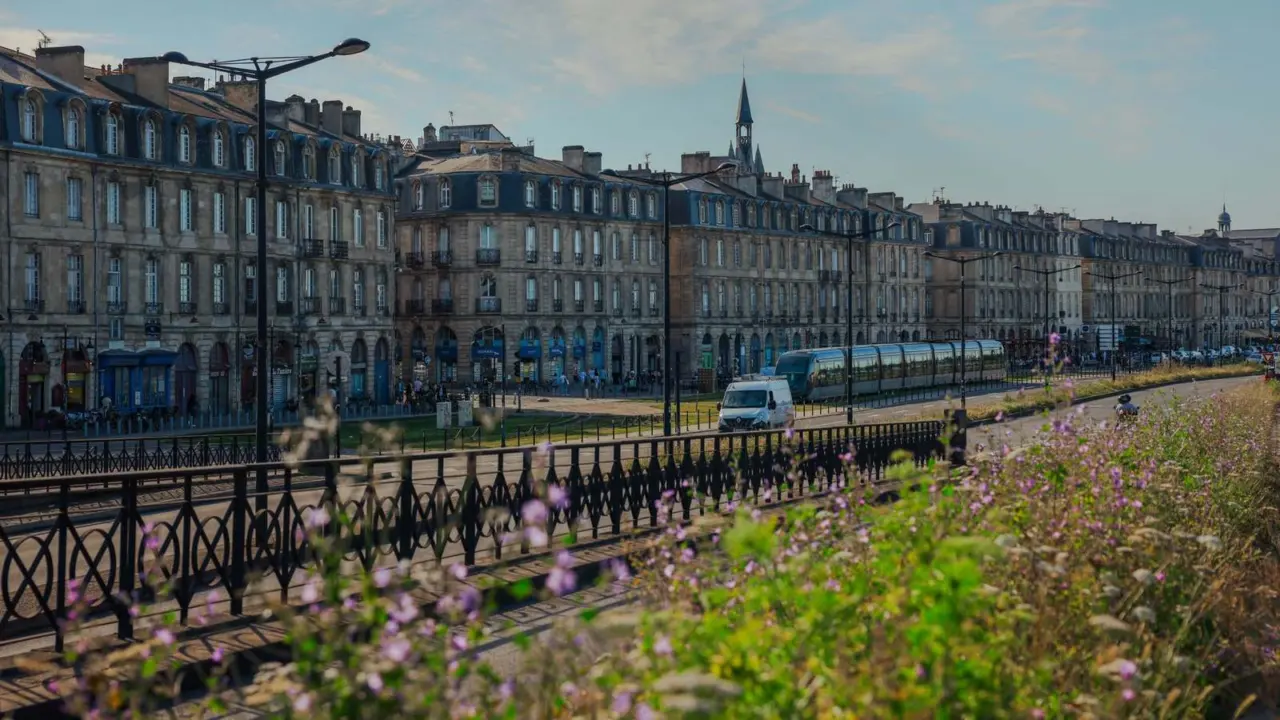
Lonely Planet says the former Place Royale was built from 1729 to 1755 to a design by Ange-Jacques Gabriel, the architect of Versailles. Its facades became a model of the classical city, with a vocabulary of ornament that includes colonnades set into the facade, mascarons, rocaille decoration and wrought-iron balconies.
Those details reward a longer lens. Instead of shooting the whole front, pick out a balcony, a mask or a row of columns and let the repetition do the work.
At the centre of the square stands the Fountain of the Three Graces, which Lonely Planet dates to 1869. It gives you a foreground anchor when you want people-free structure, and a natural focal point when you want the facades behind it.
Flytographer also points out that the Grand Théâtre de Bordeaux is just steps from the square, which makes it an easy addition to the same outing.
Porte Cailhau and Cathédrale Saint-André: towers and views
Porte Cailhau
Porte Cailhau is a 15th-century archway on Quai Richelieu, built as part of the city’s fortifications. Flytographer says its tower rises 35 metres, with several levels that each have a balcony.
The same guide says you can climb to the top for panoramic views of the skyline and the winding Garonne River. Check access before you plan around the climb, because the source does not give visiting details.
Cathédrale Saint-André and the Pey Berland tower
Flytographer describes Cathédrale Saint-André as a Gothic cathedral in the city centre, with ornate stonework, stained glass windows and soaring vaulted ceilings inside. Those interiors suit slow, steady frames: bracing yourself against a pillar and keeping your camera still will help in low light.
The Pey Berland bell tower stands apart from the main building. The same source says it dates from the 15th century and has a spiral staircase to a viewpoint with panoramic views of the city.
Jardin Public: a quieter frame
After the stone and water of the centre, Jardin Public offers a change of pace. Flytographer calls it a serene escape from the city, covering 11 hectares and filled with trees and flowers.
Use it for softer subjects: leaves, light through branches and unhurried portraits. It also gives you a break from the crowds around the water mirror, so it works well as the last stop of a photo day.
How do you plan a photo walk through Bordeaux?
The five places above work as a loose route, and the order below follows the way the sources describe them. Adjust it around your own light and energy.
- Begin at the Miroir d’eau and shoot clear-water reflections first, then wait for a mist cycle.
- Turn to Place de la Bourse for facade details and the Three Graces fountain.
- Continue to Porte Cailhau on Quai Richelieu for the tower and river views.
- Visit Cathédrale Saint-André and the Pey Berland tower for Gothic interiors and city views.
- Finish in Jardin Public for slower, quieter pictures.
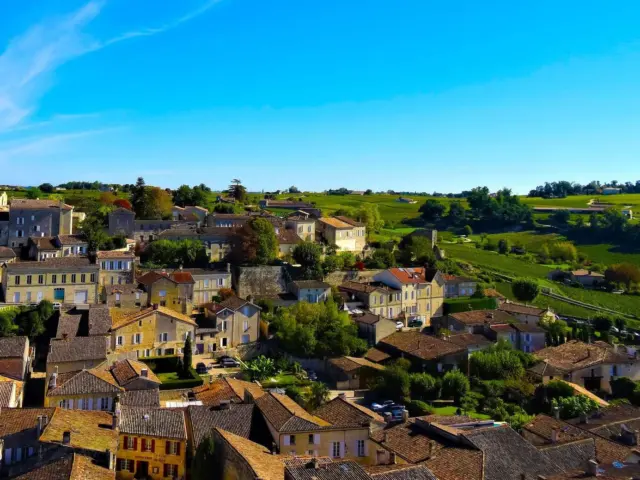
If you have an extra day and want vineyard scenery rather than city streets, the saint-emilion day trip from bordeaux is a natural next outing for your camera.
Pack for water and mist at the first stop, and keep a cloth for your lens. A shallow pool that you can walk across is also a pool that splashes.
Frequently asked questions
What is the most photographed spot in Bordeaux?
Show answer
The Miroir d’eau is the strongest candidate. Flytographer calls it one of the most Instagrammable places in France and possibly Europe, though that is the guide’s own judgement rather than a measured count.
Can you walk in the Miroir d’eau?
Show answer
Yes, the water is shallow enough for walking. Lonely Planet gives the depth as 2 cm and says it is no danger for children, but follow any signs and instructions on site.
Where can you get panoramic views of Bordeaux?
Show answer
Flytographer’s guide names two options: the top of the Porte Cailhau tower and the Pey Berland bell tower beside Cathédrale Saint-André. Check access details before you go.
Where can you photograph Bordeaux without the crowds?
Show answer
Jardin Public is described by Flytographer as a serene escape from the city. Its 11 hectares of trees and flowers make it a calmer choice than the water mirror in summer.