Planning to see Bordeaux architecture and wondering what makes it special? You’ll find one unified classical city: limestone facades, grand squares and a UNESCO-listed port, plus a few modern landmarks.
For the wider picture of the city, read the bordeaux travel guide.
| Item | Value |
|---|---|
| UNESCO World Heritage listing | 2007 (year of inscription) |
| Listed buildings | 347 buildings |
| Miroir d’eau reflecting pool | 2006 (year created) |
| Cité du Vin | June 2016 (opening) |
| Pont de Pierre construction | 1810-1822 (years built) |
| Place des Quinconces | 12 hectares |
These figures come from Wikipedia’s Port de la Lune page and the Guide Bordeaux Gironde. Figures can change, so check the source before you rely on them.
What makes Bordeaux architecture so unusual?
What sets the city apart is its unity. World Heritage Travel quotes UNESCO as calling Bordeaux exceptional in the unity of its urban and architectural classical and neo-classical expression, with no stylistic rupture over more than two centuries.
The UNESCO listing came in 2007, and Wikipedia notes that, as of 2021, the site was the largest urban area inscribed by UNESCO, covering roughly 40% of the city’s area. The Guide Bordeaux Gironde counts 347 listed buildings. The France.fr page speaks of over 350 historic monuments, so the exact count depends on the source.
Money explains the look. World Heritage Travel ties the opulent style of Bordeaux to the wealth of the wine trade and says the port let the city’s inhabitants trade easily with Britain and the Americas.
That trade has a darker side. The Guide Bordeaux Gironde notes that Bordeaux traded with Africa, exchanging glass beads for slaves who were delivered to the West Indies in return for coffee, cotton and cocoa.
The 18th-century stone facades and grand squares
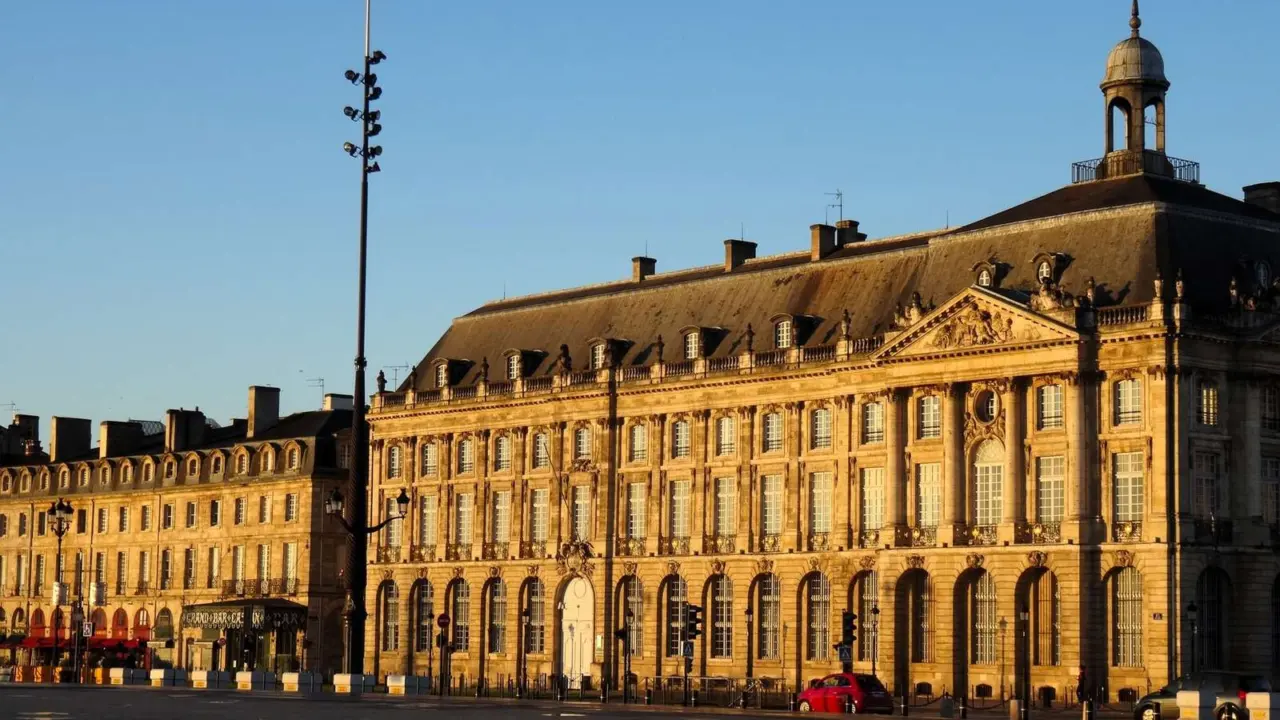
The city’s golden age of architecture falls in the 1700s, when France.fr says wealthy merchants commissioned limestone facades along the waterfront. The same page points to Place de la Comédie and Place du Parlement for their ornate mascarons and balanced proportions.
Four places show the period at its clearest:
- Place de la Bourse: built in the mid-18th century by the architect Gabriel and dedicated to Louis XV, according to the Guide Bordeaux Gironde.
- Grand Théâtre: designed by Victor Louis in 1780, says France.fr, and the Guide Bordeaux Gironde adds a facade of 12 Corinthian columns topped by statues of muses and goddesses.
- Allées de Tourny: wide avenues of lime trees and 18th-century facades, laid out by the Marquis de Tourny in 1745, per the Guide Bordeaux Gironde.
- Place des Quinconces: described by the same guide as the largest square in Europe, covering 12 hectares.
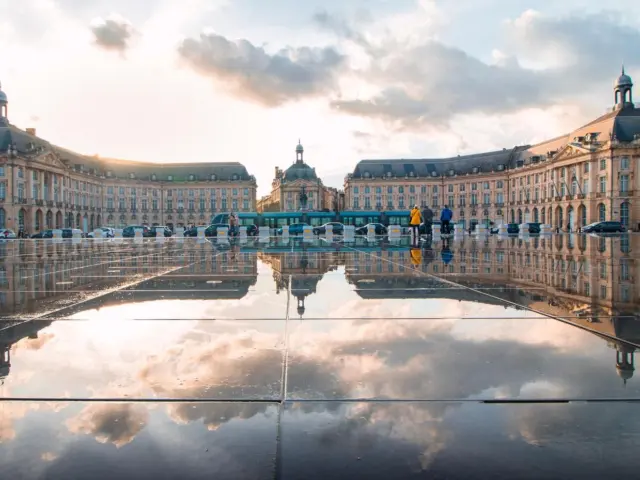
World Heritage Travel explains that Place de la Bourse was designed to impress foreign traders arriving by ship, and that it opens to the river to welcome them. The square gets a closer look in the guide to place de la bourse bordeaux.
Inside the Grand Théâtre, the Guide Bordeaux Gironde says the grand staircase would later inspire Charles Garnier for the staircase of the Paris Opera. It is a useful reminder that these facades influenced architecture well beyond the city.
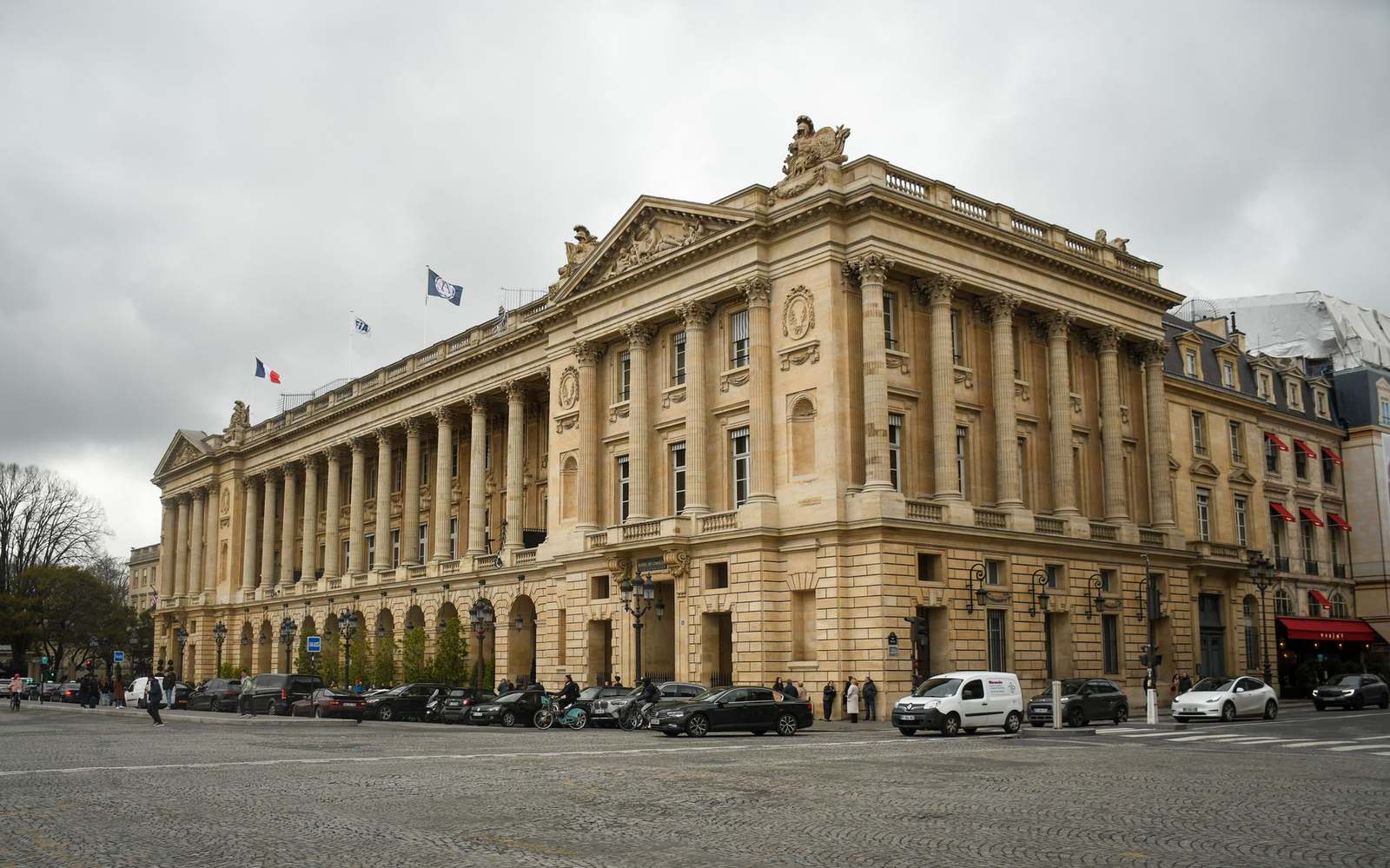
Medieval gates and Gothic churches
Not everything dates from the classical era. World Heritage Travel says six medieval gates survive, although the walls that once linked them have been destroyed.
The Guide Bordeaux Gironde traces the Porte Cailhau to an 11th-century fortress, with a defensive tower turned into a triumphal arch in 1496. The same page calls the Grosse Cloche a vestige of the city’s second set of walls, built in the 12th century, and a symbol on the city’s coat of arms.
My Guide Bordeaux lists three churches on UNESCO’s Routes of Santiago de Compostela: Saint-André, Saint-Michel and Saint-Seurin. Each adds a different layer:
- Saint-André Cathedral: the Gothic choir and nave date from the 14th and 15th centuries, and the Guide Bordeaux Gironde places the marriage of Eleanor of Aquitaine and Louis VII in 1137 in its earlier Romanesque section.
- Pey Berland Tower: the cathedral’s bell tower stands apart because of the soft, sandy soil, says World Heritage Travel.
- Basilica of Saint-Michel: flamboyant Gothic, with a detached bell tower, according to the Guide Bordeaux Gironde.
- Basilica of Saint-Seurin: the same guide calls it one of the oldest churches in Bordeaux.
From the Pont de Pierre to modern landmarks
The Pont de Pierre was built between 1810-1822 on the orders of Napoleon Bonaparte and was the first bridge over the Garonne, says the Guide Bordeaux Gironde. The same page reports that it was closed in 2025 for works to improve tram traffic, so check access before you plan a crossing.
The Saint-Jean station was built in 1855, and the guide says the station and its metal canopy have been listed as historical monuments since 1984. Its metal canopy is a useful counterpoint to the stone city.
Recent change has been as much about restoration as new building. The Guide Bordeaux Gironde credits the tram, with its first lines inaugurated in 2005, and the quays, which have offered a promenade since 2006, with restoring the city’s former glory.
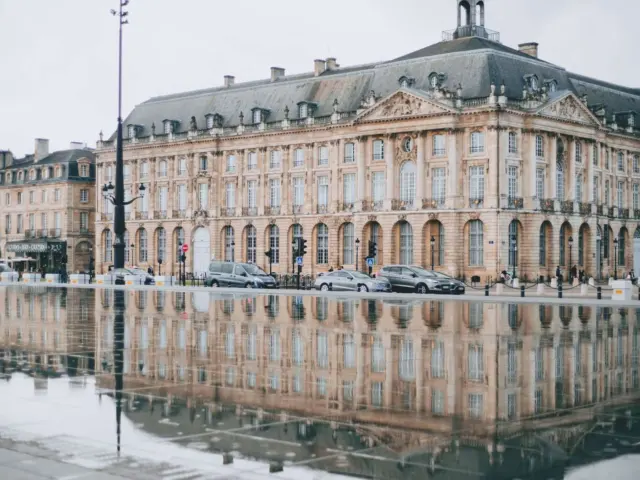
The Miroir d’eau was created in 2006 by architect Michel Courajoud and fountain designer Jean-Max Llorca, per the Guide Bordeaux Gironde. My Guide Bordeaux notes that its still film of water lets you see the architecture both upright and upside down, which suits any photographer.
The Cité du Vin opened its doors in June 2016, north of the historic center, after seven years of work, according to the Guide Bordeaux Gironde. World Heritage Travel calls it a modernistic museum with high-tech displays.
The same source describes the Bassins des Lumières as an art and light show in an old Nazi submarine bunker from World War II. It is a very different use of concrete from the limestone facades near the river.
How do you see Bordeaux architecture on foot?
The Guide Bordeaux Gironde suggests exploring on foot or by Vélib’ bike share, including the Chartrons, Saint-Éloi and Saint-Michel districts. Here is one possible order built from places named in the sources:
- Place Pey Berland, for the cathedral and its separate tower. The guide says the tower is open to visitors, with daily tours whose times vary by season.
- Place du Parlement, which features a Second Empire fountain.
- Place de la Bourse and the Miroir d’eau, best seen from the quay side.
- Place de la Comédie and the Grand Théâtre.
- The Allées de Tourny, ending at the Place des Quinconces.
Season matters too. My Guide Bordeaux recommends spring to early summer, or autumn when the vineyards are in harvest, and the guide to the best time to visit bordeaux covers timing in more detail.
Frequently asked questions
When did Bordeaux become a UNESCO World Heritage Site?
Show answer
According to Wikipedia, the Port of the Moon and the surrounding urban area were listed in 2007.
How many historic buildings does Bordeaux have?
Show answer
The Guide Bordeaux Gironde counts 347 listed buildings, while France.fr says over 350 historic monuments. The difference likely reflects how each source counts, so treat both as approximate.
Who designed the Grand Théâtre?
Show answer
France.fr says Victor Louis designed it in 1780, as an example of neoclassical style.
Which modern landmarks are worth seeing?
Show answer
Start with the Miroir d’eau, created in 2006, and the Cité du Vin, which opened in June 2016, both described by the Guide Bordeaux Gironde. World Heritage Travel also recommends the Bassins des Lumières, set in a World War II submarine bunker.