Wondering where to start with famous fine art photographers? Begin with Stieglitz, Adams, Cunningham, Arbus and Sherman, then study what each one taught about seeing. Their work shows that intent, not subject, makes a picture art.
This page is one part of the wider topic of fine art photography, and it works as a reading list of names worth studying.
| Item | Value |
|---|---|
| Stieglitz’s donation to the Boston Museum of Fine Arts | 27 photographs, in 1924 |
| Diane Arbus at the Venice Biennale | First photographer to exhibit there, in 1972 |
| Cartier-Bresson’s book Images à la Sauvette (The Decisive Moment) | Published in 1952 |
| Robert Frank’s travels for The Americans | 1955 and 1956 |
| Eliot Porter takes up color photography | 1939 |
These figures come from My Modern Met’s profile of fine art photographers and ExpertPhotography’s list of famous photographers. Dates and counts can change as sources are corrected, so check the source before you rely on them.
What makes a photographer a fine art photographer?
According to My Modern Met, fine art photographers are artists who use photography as a medium, either on its own or incorporated into their artwork through collage. A distinguishing feature is that recording a subject is not the main purpose.
Ansel Adams put the idea in one line: “Art implies control of reality, for reality itself possesses no sense of the aesthetic. Photography becomes art when certain controls are applied.” In other words, the choices a photographer makes matter more than the thing in front of the lens.
The label itself stays slippery. Great Big Photography World notes that defining fine art photography has been hard since the earliest days of the medium, and that some of the greatest photographic artists still reject the label outright.
That is why a reading list of names helps more than a rulebook. You can see how different people answered the same question.
The pioneers who earned photography a place on the gallery wall
Alfred Stieglitz fought to have photography accepted as art. He published the journal Camera Work, and the collaborators who shared his views became known as the Photo-Secession, as Great Big Photography World describes.
His campaign reached museums too. My Modern Met reports that his donation of 27 photographs to the Boston Museum of Fine Arts in 1924 was the first time a major museum accepted photography into its permanent collection.
Imogen Cunningham shows how a style can move. ExpertPhotography says her early work used the soft focus associated with Pictorialism, and she later became closely associated with sharp, detailed photography and Group f/64.
Man Ray moved between painting and photography and gave them equal value. My Modern Met credits that habit with helping break the stigma against photography as fine art, and adds that he also experimented with photograms.
Taken together, the pioneers leave three practical lessons:
- Stieglitz: argue for your work, publish it and gather other people around it.
- Cunningham: let your style change as your questions change.
- Man Ray: treat photography as an equal of any other medium you use.
Landscape and nature: Adams, Weston and Porter
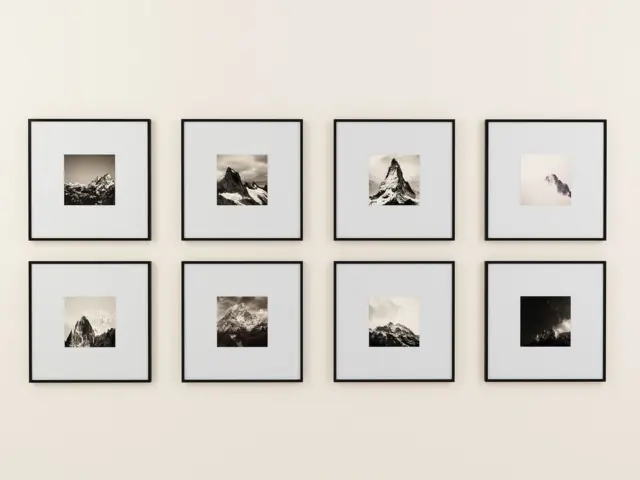
Ansel Adams was an American photographer and environmentalist best known for black-and-white landscapes of the American West, especially Yosemite, according to ExpertPhotography. He helped develop the Zone System, which relates exposure and film development to the tones in a finished print.
The same source draws a simple lesson from him: think about the final image while you are still making the exposure. Look at how dark rock, bright clouds and snow stay separate in his prints.
Edward Weston refused to be boxed in. Great Big Photography World says strict genre constraints were of little concern to him, and that he freely blended architecture, still life, street photography and landscape.
Eliot Porter offers a contrast with Adams. ExpertPhotography notes that he took up color photography in 1939 to record birds more accurately, so his smaller patterns of branches and leaves can hold attention without a sweeping view.
People in front of the lens: Arbus, Avedon, Sherman and Karsh
Portraits can carry an idea as strongly as a landscape can. These four photographers show different ways of doing it:
- Diane Arbus focused on marginalized people and gave voice to those considered ugly or imperfect. My Modern Met adds that in 1972 she became the first photographer to exhibit at the Venice Biennale.
- Richard Avedon photographed fashion models on streets, beaches and other locations outside the studio. ExpertPhotography says movement and expression became central to his fashion pictures.
- Cindy Sherman appears in her own images and changes her appearance through costume, makeup, pose and setting. Her Untitled Film Stills suggest scenes from imaginary movies, according to ExpertPhotography.
- Yousuf Karsh made a 1941 portrait of Winston Churchill that became a defining image of his career, as ExpertPhotography reports. His carefully lit portraits reward study of the direction of the light, the hands and the subject’s posture.
Across all four, posture, light and setting do the storytelling. A face alone rarely does.
What can the street and the photo book teach you?
Robert Frank worked in a different way. A Guggenheim Fellowship supported his travels through the United States in 1955 and 1956, and the resulting book, The Americans, became his best-known work, per ExpertPhotography.
The same source calls him a useful starting point because his work shows how a sequence of photographs can express a point of view. Look for recurring subjects and visual contrasts across the whole book, not just a single image.
Henri Cartier-Bresson used a Leica to make candid photographs and co-founded Magnum Photos. His 1952 book Images à la Sauvette is known in English as The Decisive Moment, according to ExpertPhotography.
The idea is more useful than simply being quick. Watch how a gesture fits the shapes and relationships already in the frame, then choose your position carefully and stay alert to what changes.
How to learn from these photographers
You do not need to study all of them. ExpertPhotography suggests starting with a field that interests you, then looking beyond it, since a portrait photographer can learn from a landscape photographer’s use of light.
Try this simple routine:
- Pick one photographer from the list above and find a handful of their pictures.
- Ask what the intent behind each picture is. My Modern Met stresses that it is always important to understand the intent of the photographer.
- Look at a body of work, not a single image, and note the subjects and contrasts that recur.
- Write down one lesson, such as thinking about the final print while you expose, and use it on your next outing.
Once you have a few lessons, you can turn them into something lasting. This guide to how to build a photography series shows how to connect single pictures into a larger body of work.
If the term itself still feels vague, the what is fine art photography guide for beginners covers the basics in plain language.
Frequently asked questions
Who is the most famous fine art photographer?
Show answer
There is no official ranking. ExpertPhotography says the numbers in its list help you navigate it and are not a ranking of talent or fame. Ansel Adams and Alfred Stieglitz are two names that appear again and again in the sources.
Can documentary photography count as fine art?
Show answer
Often, yes. My Modern Met says any photograph with an artistic intent behind it can often be considered fine art, and that Diane Arbus was considered a documentary photographer whose work always carried artistic elements.
Does fine art photography have to be black and white?
Show answer
No. Adams is known for black-and-white landscapes, while ExpertPhotography describes Eliot Porter as known for color photographs of birds, woodlands and other natural subjects.
Where can you find a longer list of photographers to study?
Show answer
A Pennsylvania College of Technology research guide lists many photographers by name, including Berenice Abbott, Ansel Adams and Diane Arbus. Use it to pick a few names and look at their work one by one.